
Great campaigns fail if the budget is scattered. A clear Retail Media Budget Allocation framework aligns spend with goals, channels and measurement—preventing overspend on low-impact ads and underspend on high-value SKUs. Yet planners often debate which KPI should steer dollars: iGRP (internet Gross Rating Point) for reach or ROAS for efficiency. Here’s how to strike the right balance.
1. Start With Objective-Driven Tiers
| Goal | Primary KPI | Budget Rule of Thumb |
| Brand Awareness | iGRP / Reach | ± 40 % |
| Mid-Funnel Consideration | View-Through Rate, CPC | ± 30 % |
| Performance / Sales | Incremental ROAS | ± 30 % |
Allocate top-line percentages first, then fine-tune by SKU using your SKU-Level Brief
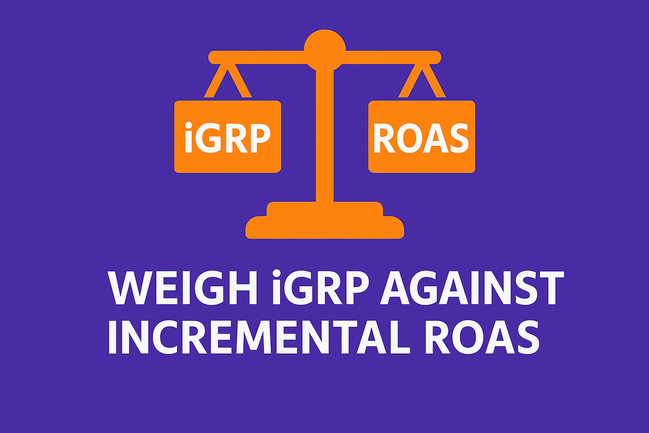
2. Weigh iGRP Against Incremental ROAS
- iGRP tells you how many shoppers you’ve reached and how often—a digital update of TV GRP that unifies on-site, off-site and CTV impressions. Learn the basics in What You Need to Know About Online GRP and iGRP.
- ROAS reveals efficiency—but raw ROAS can hide cannibalisation. As discussed in Beyond ROAS, retail media performance should be evaluated using a broader set of business and category metrics rather than a single efficiency KPI.
Rule of thumb:
- Use iGRP to set reach floors (e.g., 70 % of category shoppers, 3+ frequency.
- Optimise inside that reach window for incremental ROAS.
3. Apply a Simple 70-20-10 Split
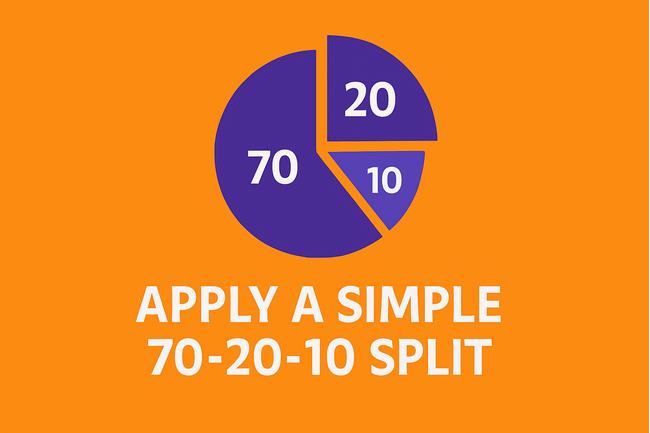
- 70 % Core Budget → proven on-site formats that hit both reach (iGRP) and performance (ROAS).
- 20 % Growth Budget → high-impact off-site or CTV units that expand reach beyond core audiences.
- 10 % Test-and-Learn → new placements (in-store DOOH, retail media beta features).
4. Monitor & Re-Allocate Weekly
Create a dashboard that blends:
- iGRP / Reach (for awareness layer)
- Incremental ROAS (for performance layer)
If iGRP exceeds target but incremental ROAS drops, shift budget to high-converting SKUs or pause low-margin items.
This type of budget reallocation becomes particularly important during major retail events, where short-term sales spikes can mask the difference between genuine growth and demand pull-forward. A structured Prime Day measurement approach can help brands interpret performance more accurately during peak periods.
Practical Example
Brand Y launched a new cold-brew line:
- Phase 1:* Spent 60 % on Sponsored Brands to secure 80 iGRPs in two weeks.
- Phase 2:* Redirected 25 % to retargeting, lifting incremental ROAS from 3.5 to 5.1.
- Result:* 18 % sales lift vs control SKU with no extra budget.

Retail Media & Commerce Growth Leader with 8+ years across Amazon and leading marketplaces. I design full-funnel strategy, governance, and measurement—building operating models and developing teams to scale performance across markets. I share practical frameworks and tools for sustainable growth.